

Why You Should Write a Mini Book Before You Do Anything Else In Your Business

Hey Revenue Writers,
Most people come up with a business idea and run off to share with the world their new business and try to become “content creators” on social media.
Now I’m not making fun, because that is exactly what I did with my first business.
I didn’t know what else to do.
I spent nearly 2 years learning the online game (with almost no real results) and one failed business, and $20k investment into my startup lost forever.
But I believe every business owner, or aspiring business owner should first write a Mini Book.
It forces you to learn things about yourself and about how you can help other people.
Below is an excerpt from my new book, Mini Book Flywheel: How to Design a Category That Makes Your Business Unforgettable that walks you through why writing a Mini Book first is a good idea and how to find out what business you should even build.
Also if you want to apply what you learn as you learn it, check out the Mini Book Flywheel - Smart Book edition. It has interactive AI built into the book as well as a integrated workbook, video, text, and audio all on one page.
- Coach Chris Stanley

How to Find Your Business Idea
IDEA
This first step is to identify what problems you are actually equipped to solve.
Most people sit down with a piece of paper and ask, “What online business do I want to build?” or “What book do I want to write?” That’s ridiculous. The only way you make income or impact is by solving a problem you already know how to solve.
So you start by identifying who you actually can help.
Choose Your Person
This may feel overwhelming at first, but there are only 3 people on God’s green Earth you can impact with your flywheel.
Who you were – helping people that are dealing with a problem you solved in the past
Who you are – helping people who are where you are and figuring out how to get around the problem you both face, and then sharing it
Who you love – helping someone solve a problem you have never solved before, but are so passionate about you can’t help yourself
95% of people should choose the first option, who you were.
It is the easiest way to build a business.
You intimately know what they are facing. You know how they feel about the problems they face. You know how they talk about the struggles they are up against.
You know this, because you were them.
ACTION STEP:
Write down who you are going to serve 1) who I was 2) who I am or 3) who I love. Then write down a brief 3-5 word description of who they are.
Who I ____________ – ____________________
MY EXAMPLE: Who I was - new independent insurance adjuster
Choose Their Problem
Each person faces a lot of different problems.
Your person might have problems with their taxes. They could be struggling to be a good dad while running an online business. Maybe they just need help mowing their lawn.
Your next job is to decide what problem you are going to help them solve.
Once again, you could make a list of all the problems your customer faces, but that’s too broad. Instead you need to think through what problems you have faced and solved as that person. These are the only problems you should even consider addressing. (Except in the rare circumstances you chose to help who you love.)
As you write out these problems you’ve solved, keep these 3 Growth Catalysts in Mind.
Bigger is Better - The bigger (or more painful/costly) the problem or the bigger the pool of people that suffer from the problem, the better. Example: paying your taxes is a big deal and a big pool of people deal with it.
Smaller is Faster – The quicker you can solve someone’s problems, the better. This spins the business flywheel faster. Example: getting someone a date in 30 days or less is quicker than helping someone stay married. It takes years to know if they will remain married.
First in Series Bonus – The earlier you help your customer in their journey, the better. They will come back for help with all their other problems. Example: if you help someone find a date, they may ask you for relational advice on in-laws, marriage, and kids.
The more Growth Catalysts your customer’s problem has, the better.
ACTION STEP
Write out all the problems your customers face that you have learned how to solve. Put the number of Growth Catalysts they have next to them. Choose one that has 2 or more.
Growth Catalysts:
Bigger is Better
Smaller is Faster
First in Series Bonus
MY EXAMPLE: Independent adjusters (Person) can’t get work unless they get lucky due to experience requirements. (2*) (Big problem, First(ish) in Series)
Decide on Your POV (Point of View)
Your point of view is what makes you and your business unique.
Someone can look to help the same person, with the same problem, but come away with completely different answers. Let me give you an example.
A 24-year-old man (person) has a girlfriend who hates his facial hair (problem).
Here are 3 different POVs about how to solve this problem and what kind of business that POV would result in.
POV #1: The Shaver – Learn how to shave/groom so she likes it = shave club
POV #2: The Laser – Do electrolysis so you don’t have to shave often = hair removal company
POV #3 – The Heart Breaker – Break up with your girlfriend and find a new one = dating coach
Do you see how your point of view—how you believe someone should solve their problem—greatly impacts the business you will build and book you will write?
The easiest way to do this is to look at someone dealing with the problem you want to help solve and say, “You know what would make their life so much better? If they’d just [insert POV].”
If they’d just shave their beard. If they’d just get electrolysis. If they’d just find a new girlfriend.
ACTION STEP
Write down what your POV (point of view) is. What will make your customer’s life so much better?
Fill in the blank, “(Person)’s life would be so much better if they would just _________________________.”
MY EXAMPLE: “Independent adjuster’s life would be so much better if they would just start with daily auto claims.”
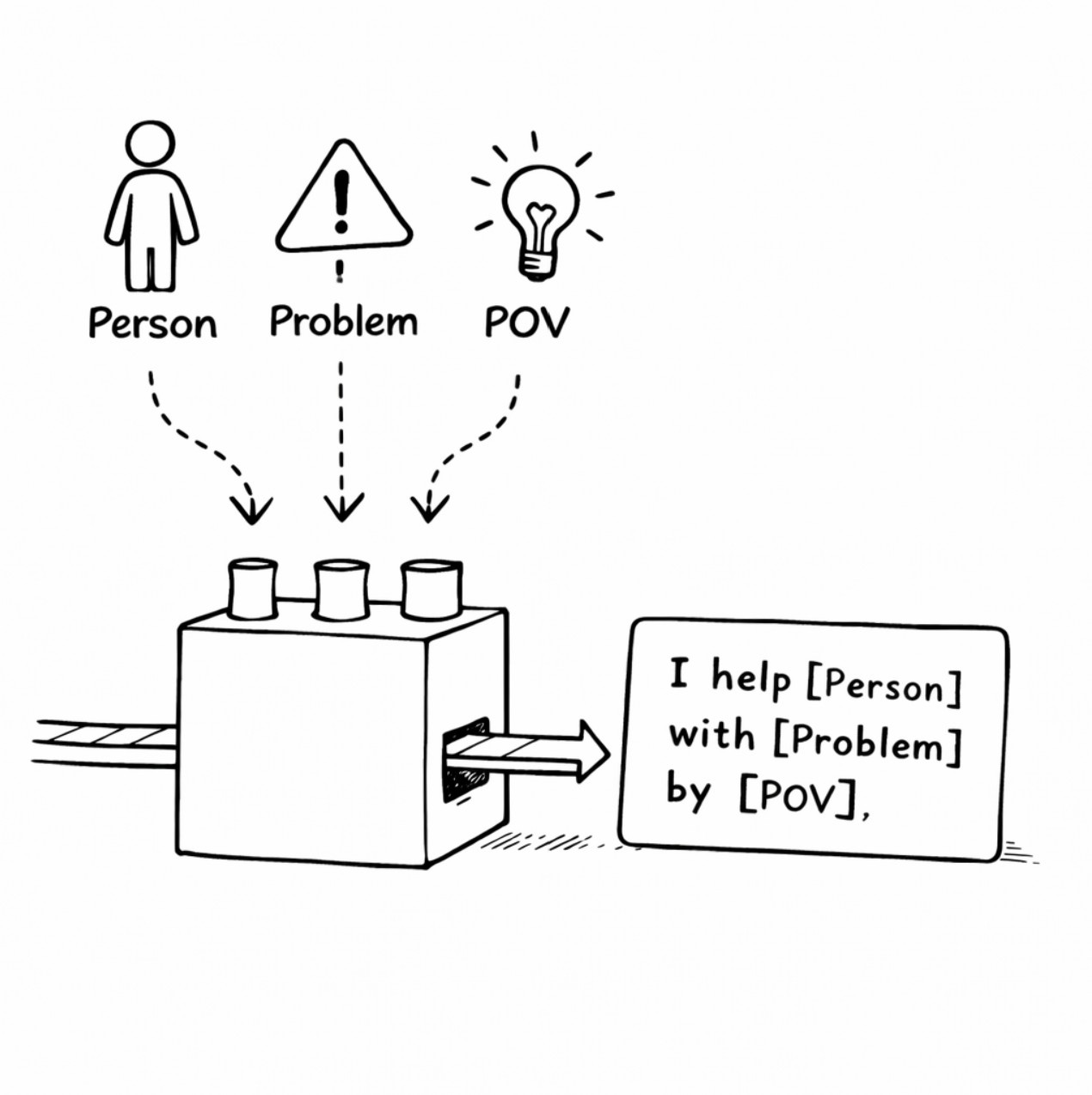
You can now pull all three of these together in one single statement.
“I help _[Person]_ with _[Problem]_ by _[POV]_.”
MY EXAMPLE: I help new independent adjusters (person) with experience requirements (problem) by having them start with auto claims. (POV)